It is the first question almost everyone asks us, and it deserves a straight answer rather than a single number. A house in Ghana is built in stages, and each stage has its own clock. Some of those clocks you control. Some you don't.
As a rough guide, a typical family home commonly takes somewhere between eight months and a year and a half from the day ground is broken, and longer when the design is large or the work stops and starts. Here is where that time goes.
1. Before anything is built: land and paperwork
Most delays we see start before a single block is laid.
- The land. Make sure the title is clean before you spend on drawings. A search at the Lands Commission, and an indenture you can trust, saves years of trouble later.
- The drawings. Architectural and structural drawings have to be finished, and they have to match what you actually want to build. Changing them halfway costs time twice.
- The building permit. Your Metropolitan, Municipal or District Assembly issues it. How long it takes varies by assembly and by how complete the application is, so it is worth starting early.
None of this is wasted time. A project that starts with clean land, final drawings and a permit in hand runs faster for its whole life.
2. The substructure
Clearing, setting out, excavating, foundations and the ground floor slab. This is the stage where the soil matters most. Ground that is soft, waterlogged or full of rock changes what the foundations need, which is why we walk the site before we price anything.
3. The superstructure
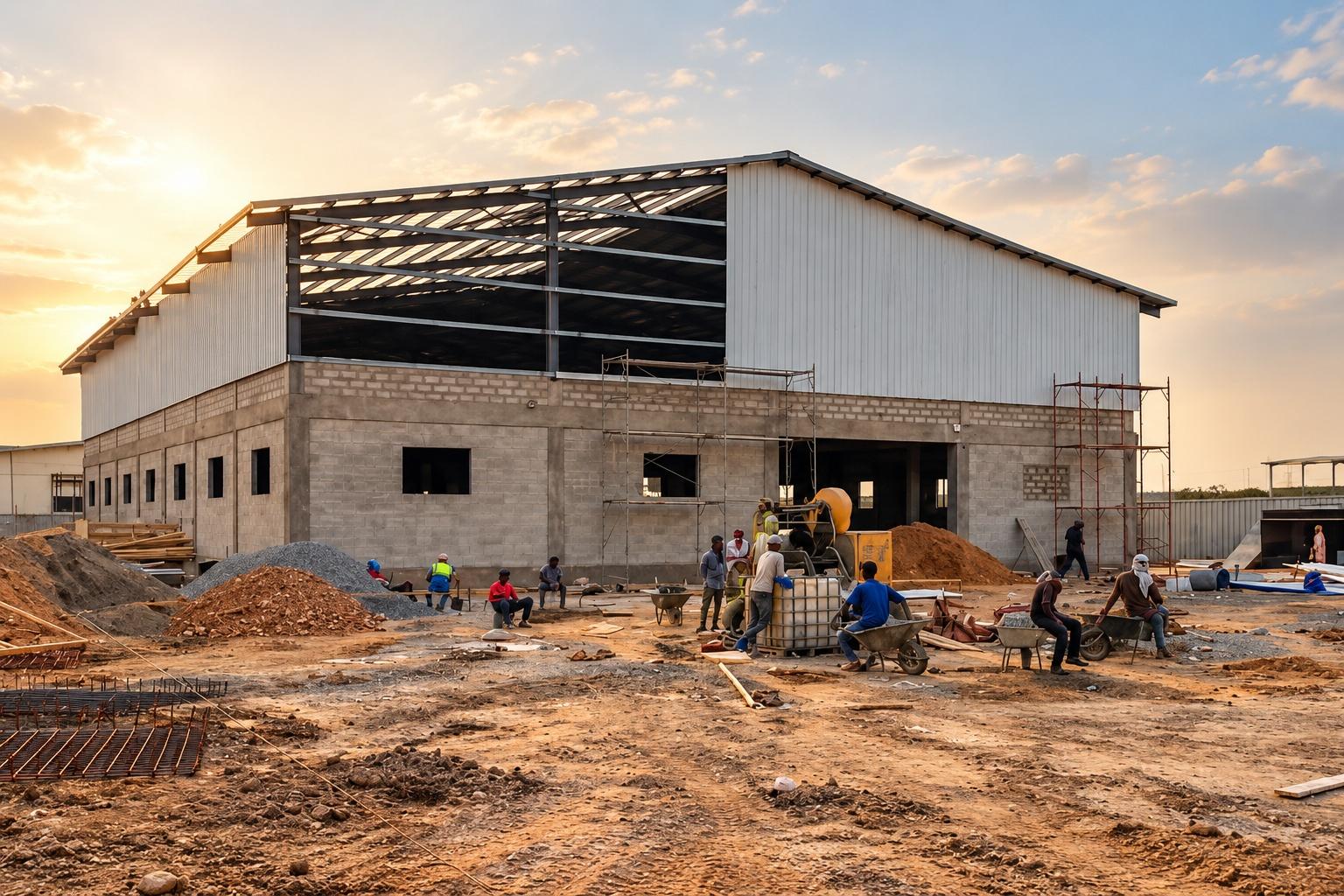
Blockwork, columns, beams and the upper floors if there are any. This is the stage people picture when they think of building, and it is the one most affected by how steadily the project is funded. Crews that stop and restart lose momentum.
4. Roofing
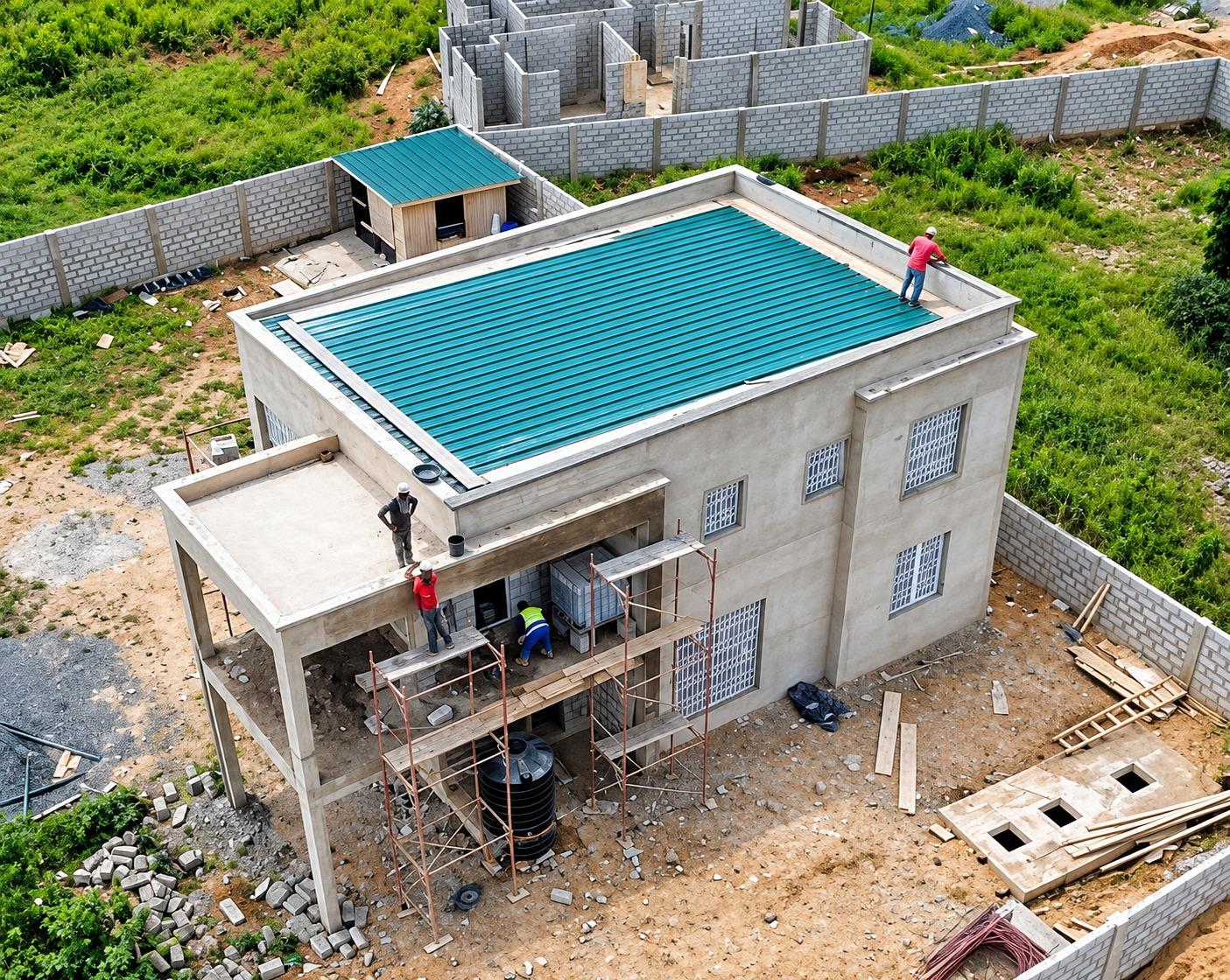
Once the roof is on, the building is protected and the inside work can carry on through the rain. Getting to roof level before the heavy rains is one of the best things you can do for your timeline.
5. Services and finishes
Electrical, plumbing, plastering, ceilings, tiling, doors and windows, painting and external works. Finishes often take longer than people expect, because they involve the most decisions: every tile, fitting and colour has to be chosen and delivered.
What speeds a project up, and what slows it down
What speeds it up: - Final drawings and a permit before work starts - Funding that matches the work schedule, so the crew never stands idle - Decisions on finishes made early - One contractor carrying the whole job, so there is no gap between trades
What slows it down: - Changing the design during construction - Work stopping and starting while money is found - The rainy seasons, especially for earthworks and the substructure - Materials ordered late
Building from abroad
Many of the homes we build are for clients who live outside Ghana. If that is you, the same rules apply, with one more: choose a contractor who reports to you properly. You should be seeing progress, with photographs, at every stage rather than discovering problems on a visit home.
How we handle it
We start with a site visit and a clear scope. Then we give you a fixed price and a fixed timeline before any work begins, and our own crew carries the job from the substructure to the day you get the keys. You can see homes we have delivered, such as the Apedoh Residence in Oyibi and the Newman Residence in Amrahia, on our residential construction page.
If you are planning a house, send us an enquiry with your drawings or just the idea, and we will tell you honestly how long yours should take.