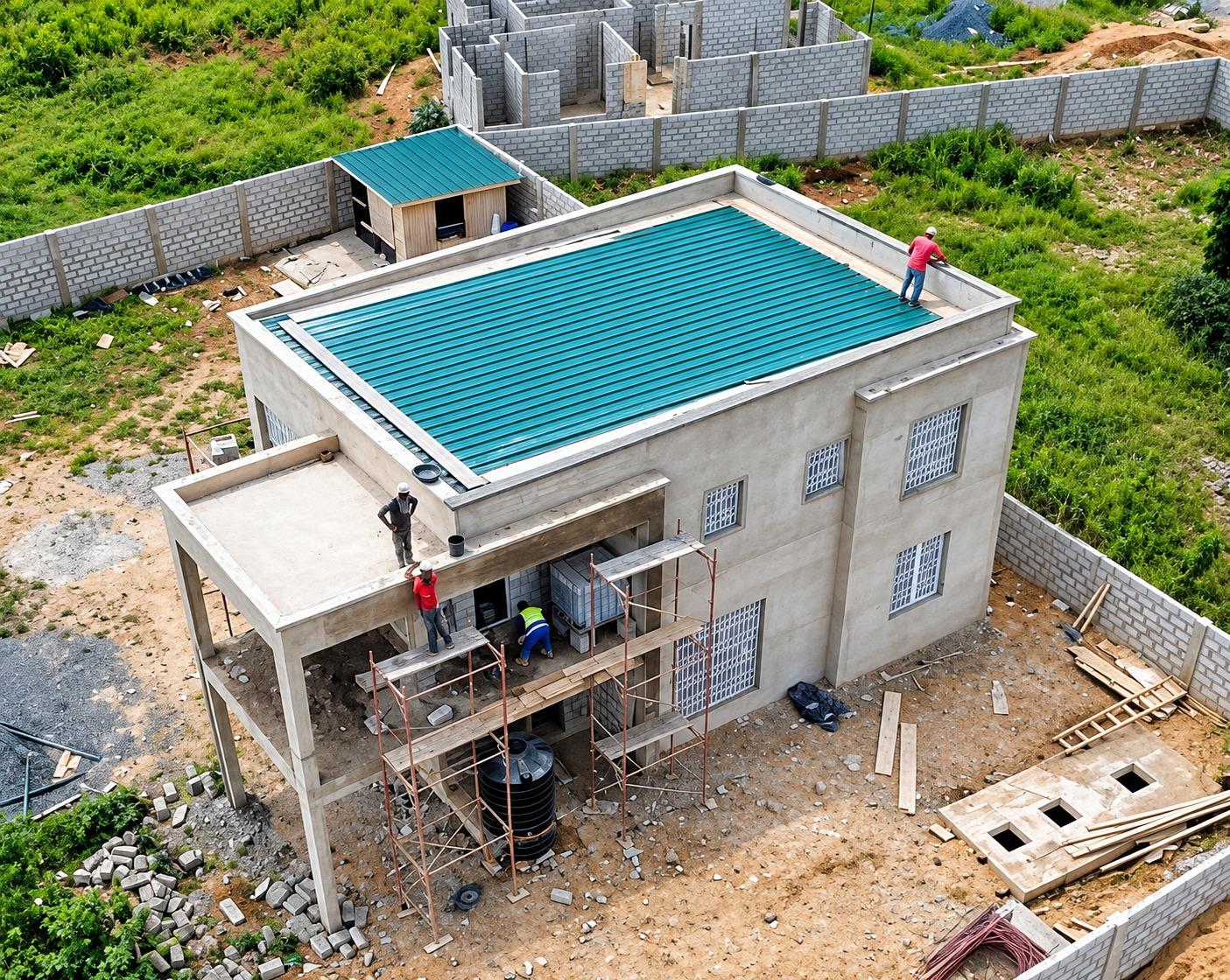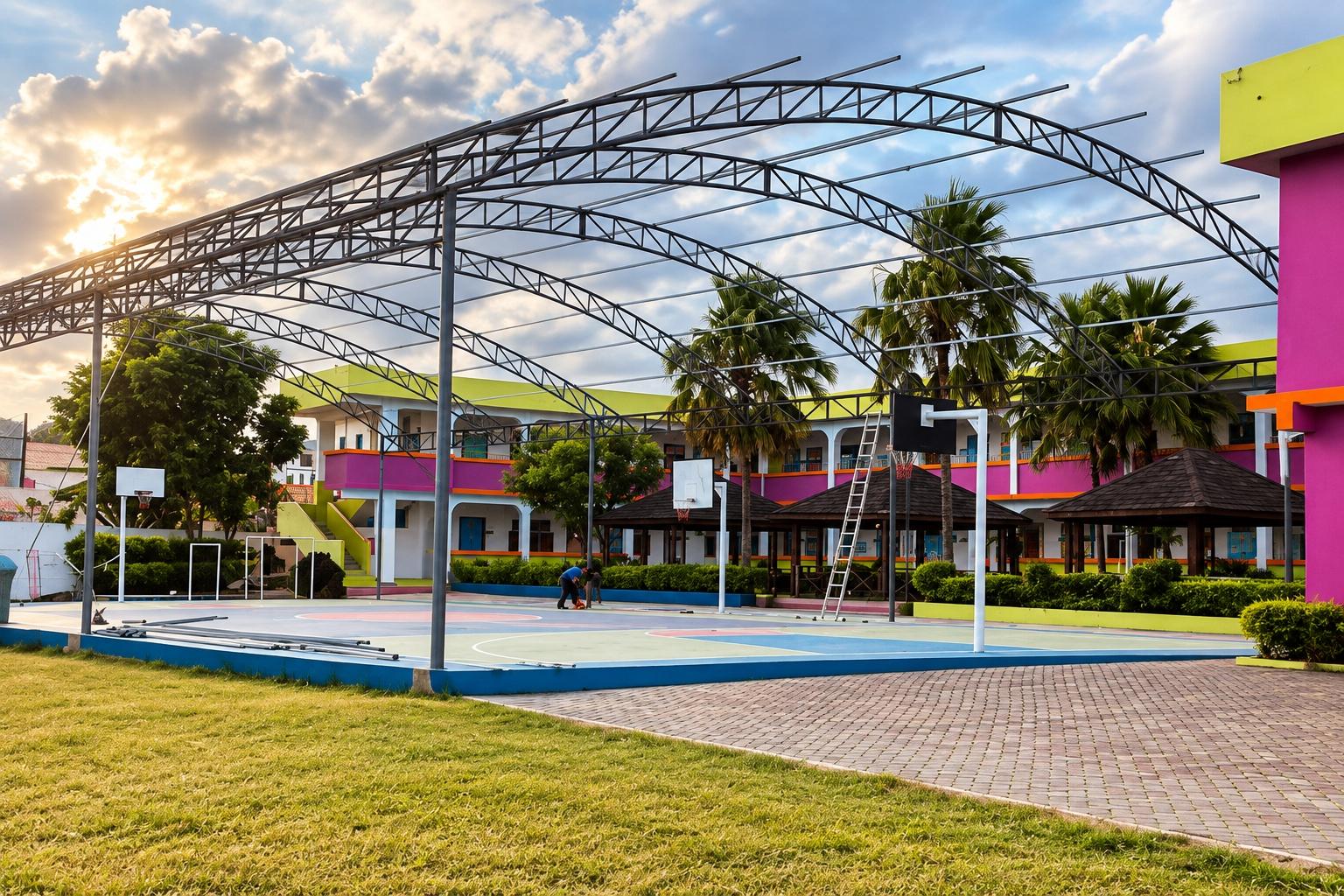
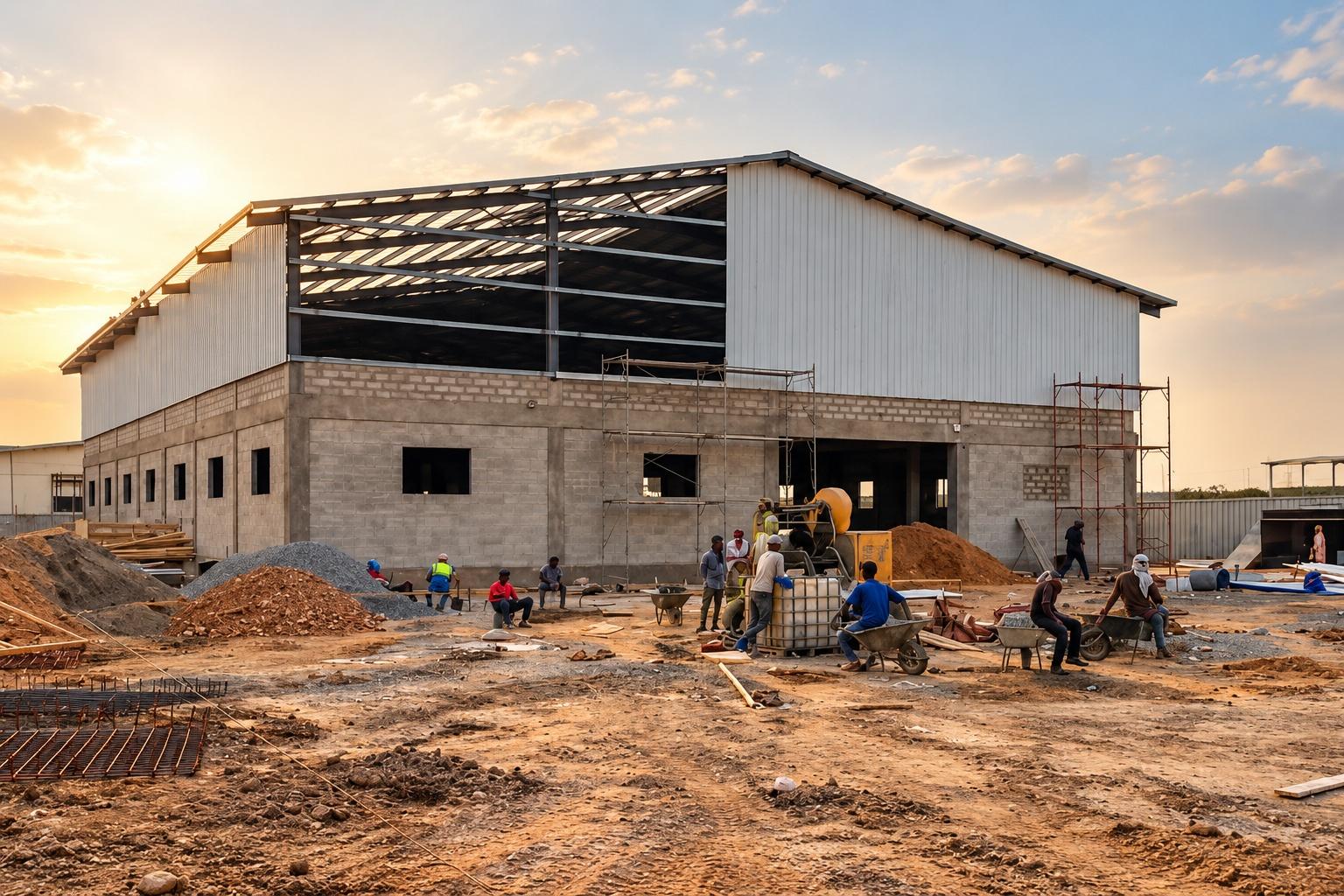
Industrial construction is our speciality, and most of it happens in and around Tema: warehouses, factories, steel sheds and plant buildings for clients who need them to work from the first day. Over those jobs, one lesson keeps repeating. The problems that cost the most money are decided before construction starts.
Here is what to plan for.
Start with how the building will be used
Before anyone draws a column, be clear about what happens inside:
- What goes on the floor. Racking, forklifts, heavy machinery and stacked goods all put different loads on the slab. The floor has to be designed for the heaviest use it will ever see, not the lightest.
- How high you need to stack. Clear height under the roof decides how much you can store, and it is far cheaper to get right now than to raise later.
- How goods move. Loading bays, door sizes and where trucks turn should be planned with the layout, not squeezed in afterwards.
- Whether you will grow. If expansion is likely, leave room and design the structure so it can be extended.
Know your ground
A geotechnical survey tells you what the soil can carry. Coastal and low-lying ground around Tema can behave very differently from one plot to the next, and the foundations and floor slab should be designed around what the survey finds.
Plan the drainage as seriously as the building
Heavy rain is the enemy of a big roof and a big yard. Roof drainage, site levels, storm drains and hardstanding all need to be designed together, so water leaves the site instead of collecting where your trucks and stock are. It is the same discipline behind the Storm Drain Project in Tema.
Steel, roof and ventilation
Steel portal frames are the usual choice for warehouses and sheds: quick to erect, with wide spans and few columns in the way. Pay attention to the roof sheeting, insulation and ventilation, because a large steel building in Ghana's heat can become very hot inside. That matters for the people working there and for the goods you store.
Power, water and fire safety
- Power. Industrial equipment often needs more power than a standard connection provides. Find out early what your supply will be, and whether you need a transformer or a standby generator.
- Water. Process water, washrooms and fire-fighting water all need planning.
- Fire safety. Escape routes, fire-fighting equipment and the separation of risky processes have to be designed in. You will also need the right certification from the Ghana National Fire Service.
Approvals for industrial sites
Industrial projects often need more than a building permit. Depending on what you make or store, that can include an environmental permit from the EPA, and, if you are building inside the free zones enclave, approval through the Ghana Free Zones Authority. Factor these in early, because they can set the pace of the whole project.
Fit-out is part of the job
A warehouse is not finished when the roof goes on. Offices, washrooms, mezzanines, lighting and services all need to be ready on handover day if the building is going to be used straight away. Scope them in from the start.
Our industrial work
Recent industrial projects include the Cosmo Life Sciences warehouse in the Tema Freezone, Azidus Laboratories in Tema and the new OA&J Pharmaceuticals factory in Kpone. You can see the full list on our industrial construction page.
Planning a warehouse, factory or plant building? Tell us about it, and we will walk the site with you before we put a number on it.